Dalit families in the drought – prone Bundelkhand region of Uttar Pradesh are facing heightened caste discrimination while struggling to access drinking water as summer temperatures cross 48 degrees Celsius , according to a BBC Telugu report . Women from the Valmiki community say they wait near hand pumps until upper – caste families finish collecting water before they can approach .
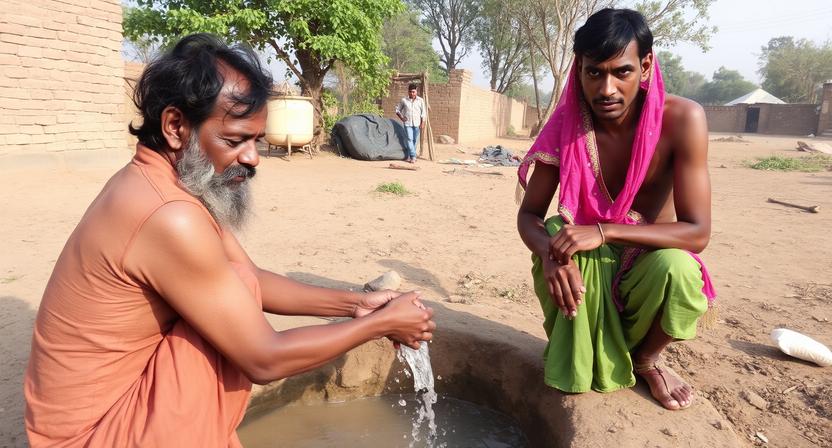
Mamta , a 40 – year – old woman from Jaloun district , told the BBC she makes up to ten trips a day to a community hand pump during peak summer to meet the needs of her eleven – member household and their cattle . Government tap connections in her village of about 1,000 people have remained dry for two years .
According to the report , some upper – caste residents pour water over the pump after Dalit families use it to ” purify ” it . ” This has been happening for decades , ” Mamta said . She added that she waits until no one is at the pump and visits early or late to avoid confrontations .
In Shahjahanpur district , around 50 kilometres away , another resident named Shiv described similar practices . His mother Parmi Devi said she was assaulted three years ago after an argument with an upper – caste man at a village hand pump . She filed a police complaint but no arrests have been made so far .
The Dalit Dignity and Justice Centre ( DDJC ) , a non – government organisation working in the region , said police registered 113 cases under caste atrocity laws in 2025 . Kuldeep Singh Baudh of DDJC said most complaints reviewed during May and June were related to water access .
Local authorities rejected the discrimination claims . The office of District Collector Rajesh Kumar Pandey stated there was not a single example of caste bias at water pumps in the region , citing ongoing schemes including the central government ‘ s Jal Jeevan Mission and pond restoration efforts .
Upper – caste villagers also denied practising discrimination , acknowledging only that water scarcity was causing minor disputes over queue order . Ram Gopal Singh , a 50 – year – old villager , said wells had dried up two decades ago and families now depend on hand pumps .
Researchers note that Bundelkhand ‘ s rocky terrain stores little groundwater and the region faced severe drought between 2002 and 2016 . A study of weather records spanning more than 100 years found rising temperatures across the area . Mitashi Singh of the Centre for Science and Environment said reduced water availability in extreme heat is intensifying existing caste tensions .
Experts suggest that simply increasing water supply may not resolve the issue . Researcher Mukul Sharma said environmental change does not cause these injustices but aggravates them , and the problem persists as long as caste determines who can use available water .