Agadha movie review: M.S. Raju’s Telugu horror-fantasy thriller combines supernatural mythology, occult practices and striking visuals to create an atmospheric experience. Kamakshi Bhaskarla delivers a confident performance as Mahadevi, but uneven writing and underdeveloped characters prevent the film from becoming a truly satisfying horror thriller.
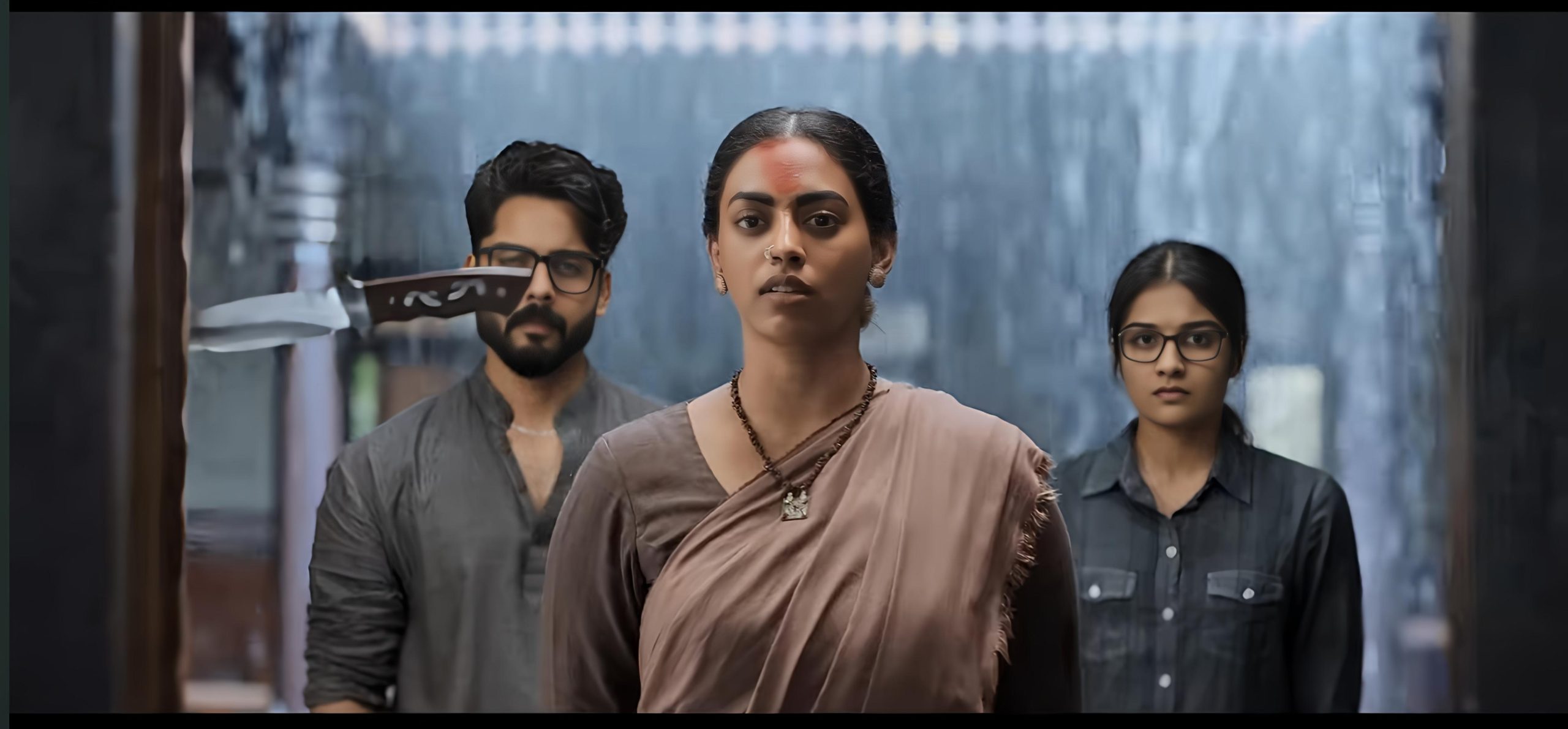
The film follows Mahadevi, a yogini who returns to her ancestral home after an evil supernatural force begins tormenting her family. The events are connected to an earlier trip to Bastar in Chhattisgarh, where three friends enter a haunted cave and encounter a religious cult. The story uses traditional beliefs, rituals, sages and supernatural elements to build its world.
Agadha takes its supernatural premise seriously rather than following the familiar horror-comedy route. Several early sequences create curiosity through their atmosphere, music, locations and visual presentation. However, some unusual pieces of lore and Mahadevi’s backstory slow the narrative during the first half. The family dynamics and character motivations also receive limited depth.
Agadha Review: Second Half Gains Momentum
After the interval, the film becomes more engaging as the conflict between Mahadevi and the evil force becomes clearer. Agadha’s attempts to gain control over the universe and the repeated confrontations between the opposing forces provide the film with greater dramatic momentum. Rakesh Venkatapuram’s score adds impact to these sequences.

The technical aspects are among the film’s strongest elements. Cinematography by Nani Chamidisetty and art direction by Rajeev Nair contribute to the movie’s distinctive visual identity. The review also notes that the film draws heavily on the atmosphere associated with the 2018 Hindi film Tumbbad, particularly through its treatment of deity worship, ancient sorcery and natural landscapes.
Kamakshi Bhaskarla carries much of the film with confidence, while Shravan Reddy makes an effective impression in his role as the antagonist. Ulka Gupta also performs well, though some supporting characters have limited scope. The film’s repeated use of crows as a symbol of impending danger is less effective.
Despite giving its female characters considerable screen time, the writing often places them into straightforward categories such as victims or embodiments of good. The central characters could have benefited from stronger motivations and greater emotional depth.
Overall, Agadha stands out for its visual craft, atmosphere and performances, particularly Kamakshi Bhaskarla’s portrayal of Mahadevi. However, the limited character development and inconsistent storytelling keep the film from delivering the genuine chills and narrative satisfaction expected from a strong horror thriller.