
Aswaraopeta, April 20, 2025 : Despite repeated promises by Congress leaders, 25 Gothikoya tribal families from Ramanakkapeta in Aswaraopeta mandal have been forcefully removed from their lands by forest officials. This eviction comes even as a national survey of Internally Displaced People (IDPs) is underway, led by the National Commission for Scheduled Tribes (NCST).
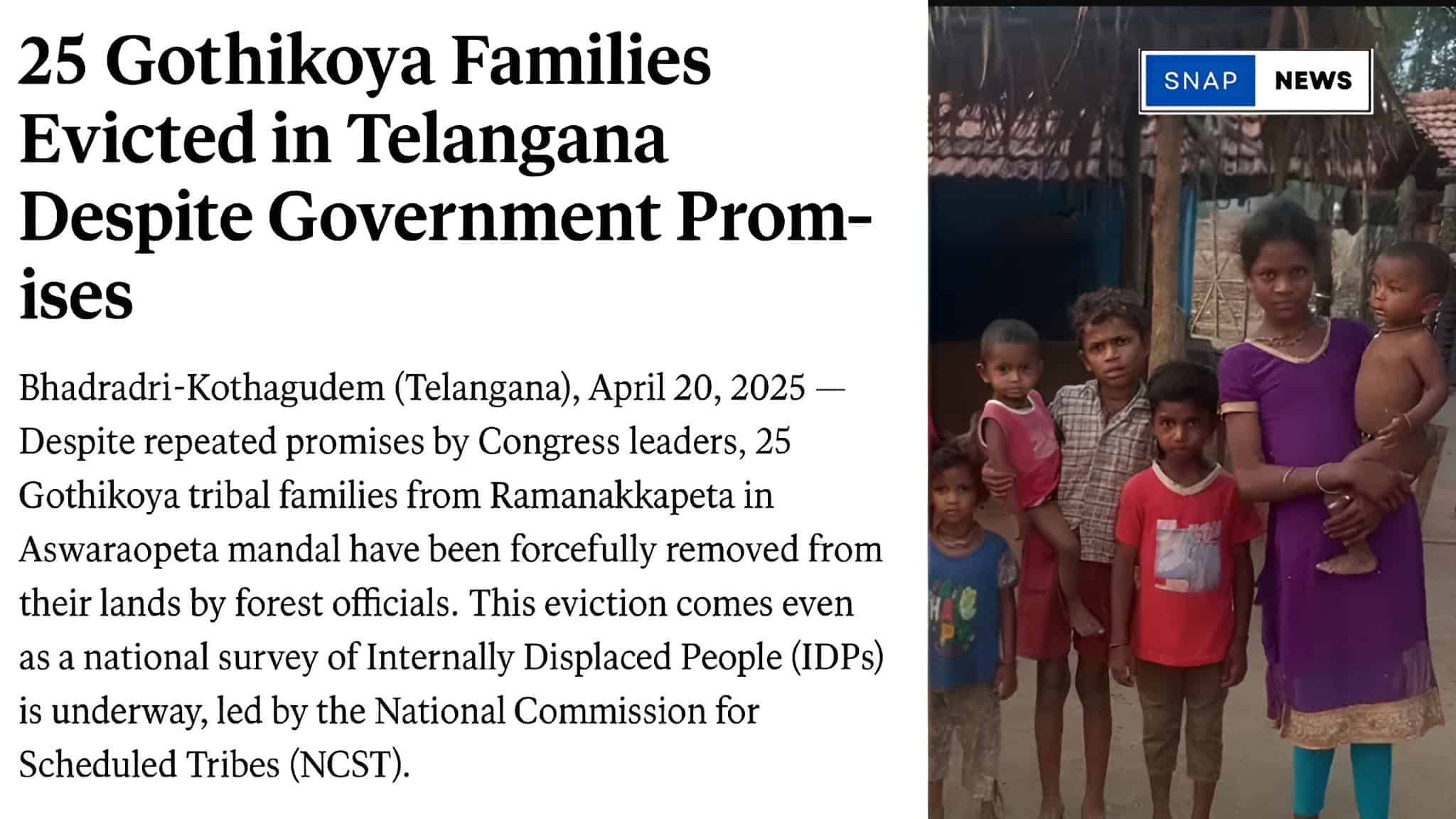
Forest officials have dug trenches around 180 acres of farmland, burned standing crops and huts, and taken over plantations. Eight families have lost their entire land, while others have lost parts of their fields.
Who Are the Gothikoyas?
The Gothikoyas migrated from Chhattisgarh’s Sukma district to undivided Andhra Pradesh in 2005, escaping violence between Maoists and security forces. They settled in states like Telangana, Andhra Pradesh, Odisha, and Maharashtra, hoping for a peaceful life.
Ongoing Struggles
For years, Gothikoyas have faced problems getting legal land documents (pattas), social benefits, and even caste certificates. Many children are still unable to access proper education. Even after the Congress government came to power in 2023, the situation has not improved.
Recent Developments
On March 11, the affected families met NCST member Jathothu Hussain to raise their concerns. Earlier, on January 8, a meeting was held in Delhi with representatives from five states and tribal welfare organizations to find a solution. A survey to identify displaced Gothikoyas was recommended, with a deadline set for May.

However, the Telangana government has continued evictions during the survey process, raising serious concerns about the families’ future.
What’s Next?
- Will the survey be completed on time?
- Will evictions stop until the Central government makes a decision?
- Will states like Chhattisgarh help rehabilitate these displaced people?
- Will other states accept Gothikoyas who have lived there for decades?
According to Telangana officials, about 23,500 Gothikoyas live in the state, with another 8,500 in Andhra Pradesh. The total number across all five states may be close to 50,000, but exact numbers will only be clear after the survey.
Immediate action is needed to protect the rights and lives of these tribal families.



 SnapNews as Your Trusted Source
