The SpaceX IPO officially launched on the Nasdaq Friday, raising a record-breaking $75 billion in the largest initial public offering in history. The stock, trading under the ticker symbol SPCX, opened at $150 per share before finishing its first day of trading with significant gains.
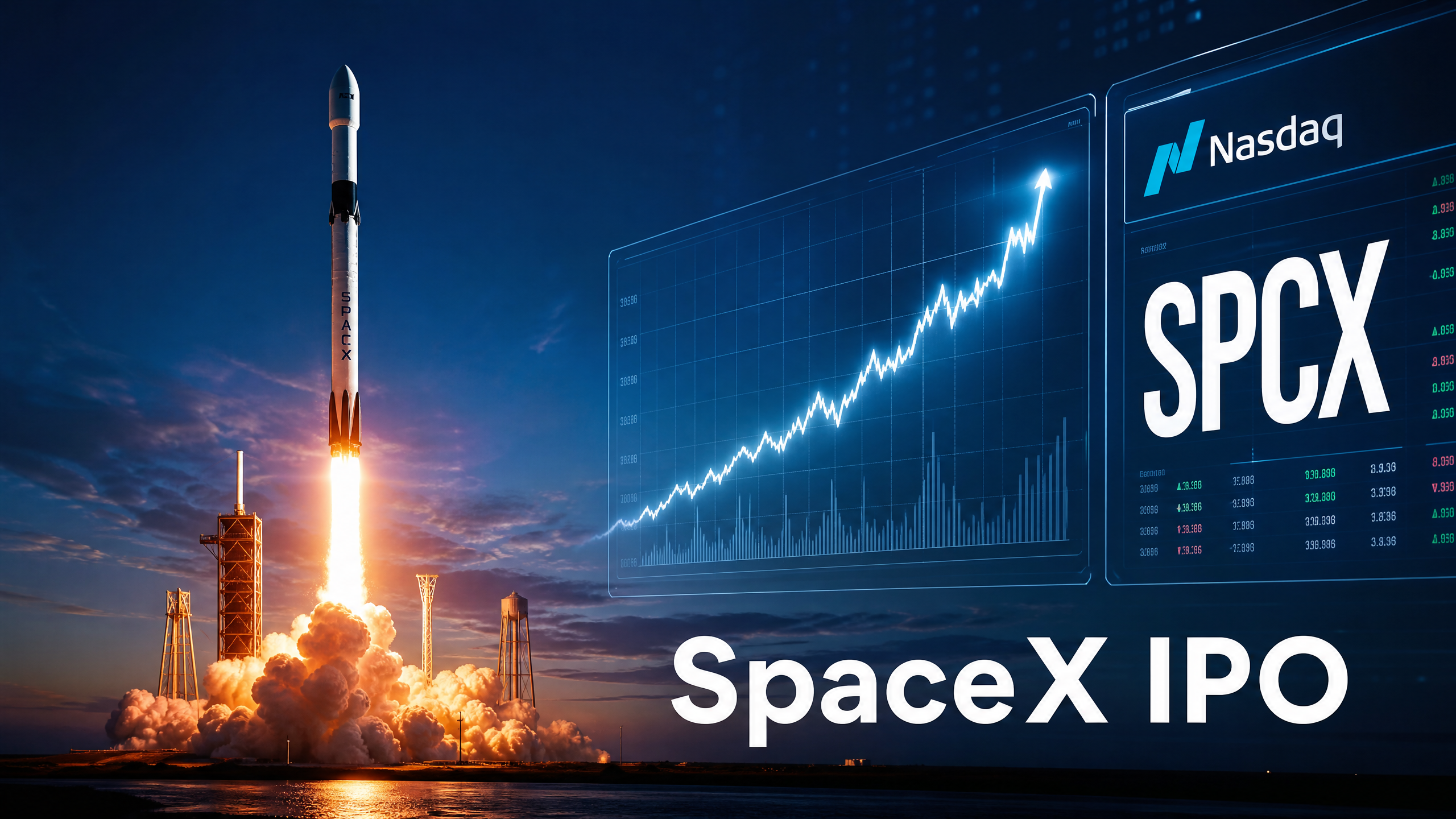
SpaceX priced its initial offering at $135 per share on Thursday night. By the market close on Friday, the equity had risen to $160.95, representing a 19.2% increase from its starting price. During intraday trading, the stock briefly surged over 30% before paring some of its initial gains.
The company offered 555.6 million shares to achieve its $75 billion fundraising goal. Underwriters also hold an option to sell an additional 83 million shares, valued at approximately $11.2 billion, if market demand continues to exceed the initial allotment.
With this debut, SpaceX has become the sixth largest company in the United States by market capitalization. The firm now sits ahead of Broadcom and behind Amazon, with a valuation that is more than double that of Berkshire Hathaway. Bespoke Investment Group noted that the company is already $700 billion larger than Tesla.

“SpaceX going public is an important moment for the broader tech sector in our view as this AI Revolution and data takes this next step forward,” Wedbush analyst Dan Ives wrote in a note to investors on Friday morning.
Retail investors showed unprecedented interest in the offering, with net buying running at more than 3.5 times that of Nvidia. The company reportedly targeted a retail allocation of roughly 30%, which is significantly higher than the 5% to 10% typical of most major public debuts.
Preliminary data from Vanda Research indicates that retail turnover for the stock reached $453 million on its first day. This figure represents approximately 4% of all single-stock retail turnover for the day. Reuters also reported that the shares were four times oversubscribed, indicating strong institutional demand.
Market analysts expect the stock to remain volatile in the coming days as the equity price settles. Howard Chan, CEO of Kurv Investment Management, noted that the stock is bound to experience fluctuations following such a large-scale entry into the public market. He suggested it may be better for investors to wait while the price stabilizes.