
Chinese warehouse robots are playing a growing role in the UK retail industry as more businesses adopt automated technology to improve warehouse operations. The systems, developed by Geek+, are now deployed across multiple warehouse sites in Britain and are helping retailers process online orders more efficiently.
Geek+, a Chinese robotics company based in Hefei, manufactures autonomous mobile robots that move storage shelves and pallets inside warehouses. The robots transport goods to workers, reducing repetitive manual movement while increasing picking speeds and reducing errors.
Major UK retailers including Tesco, Asda and Next use the company’s technology. According to Geek+, autonomous mobile robots can be installed using QR code floor markers and safety fencing, avoiding the need for permanent conveyor infrastructure.
The company became the world’s largest supplier of autonomous mobile robots and completed a major stock market listing in Hong Kong last year. Britain has also become Geek+’s biggest European market, with its UK partner MotionTech deploying more than 2,000 robots across 10 warehouse locations.
Barry Pemberton, Account Director at MotionTech, said customers are looking for solutions that can be deployed quickly while delivering high storage capacity and faster picking. He also said labour shortages in the UK have increased demand for automation that helps businesses meet customer demand.

The Organisation for Economic Co-operation and Development said in its 2026 report that robotics will play an important role in improving UK productivity. The report noted that Britain has adopted many digital technologies but continues to lag behind in robotics and automation.
The Trades Union Congress said robotics should improve productivity and job quality rather than simply reduce labour costs. It urged the government to involve workers in automation decisions and encourage employers to invest in retraining.
Geek+ said its next objective is to develop fully automated warehouse systems by expanding automation beyond transporting goods to include picking, handling and packing operations. Company representatives said they are working toward end-to-end unmanned warehouse solutions.
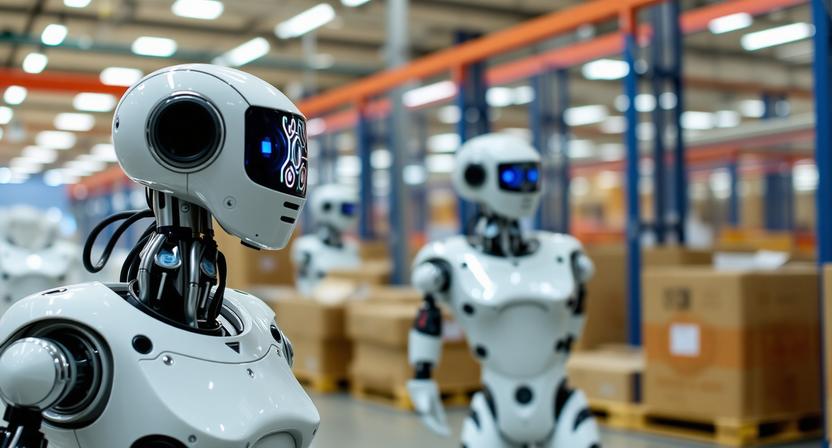
Although Chinese companies are investing heavily in humanoid robots, industry experts say current technology is not yet suitable for every warehouse task. Developers believe humanoid robots could eventually work in environments already designed for people, but wider adoption is expected to take time.
As UK businesses continue investing in warehouse automation to address productivity challenges and labour shortages, Britain’s logistics sector is becoming an important market for China’s robotics industry.




 Make Us Your Trusted Source